-
Essential:
Essential cookies are essential for you to browse the website and use its features. Cookies that allow web shops to hold your items in your cart while you are shopping online and navigating the website are an example of strictly necessary cookies. Our website does not work without these cookies, so they are stored without your express consent.
-
Preferences cookies:
Preferences cookies can be used to change the user experience of our website. Preferences cookies allow a website to remember choices you have made in the past.
-
Statistics cookies:
Statistics cookies are used to collect information about how you use our website. None of this information can be used to identify you.
-
Marketing cookies:
Marketing cookies track your online activity. The purpose of marketing cookies is to help advertisers deliver more relevant advertising or to limit how many times you see an ad.
PRODUCT TESTER'S TRAVEL REPORT – TO KOLI VIA THE BORDERLANDS WITHOUT A CAR
Text and photos: Jani Halme
Product Tester's Travel Report - TO KOLI VIA THE BORDERLANDS without a car
In Iceland, they understand packaging tourism services. Everyone arriving on that smoky island quickly learns what the Golden Circle - Gullni hringurinn is. This widely advertised tour combines the Geysir hot springs gushing from the earth's depths, the enormous Gullfoss waterfalls, and Þingvellir National Park, known for its ancient assembly grounds, into one trip. The destinations then offer plenty of smaller-scale activities, from museums to restaurants and craft shops.
The Golden Circle is easiest to travel by one of the numerous buses, the providers of which are plentiful on the streets of the country's capital, Reykjavik.
One of the world's most successful tourism packages came to mind several times when I had the opportunity to test the soon-to-be-launched “TO KOLI VIA THE BORDERLANDS without a car” tourism product. Just like in Iceland, here on the eastern border, numerous fascinating destinations have now been successfully brought together in an easily accessible way.
By train through special destinations directly to the national landscape
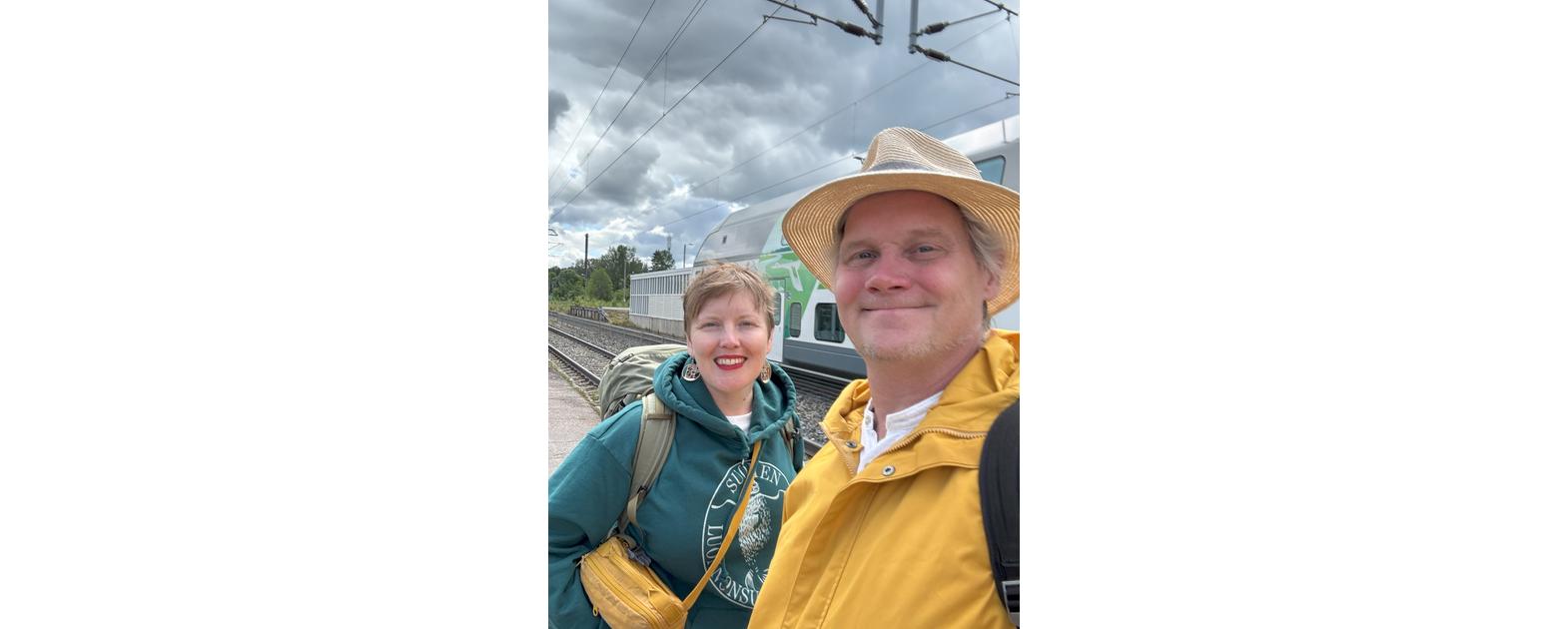
The basic idea of the new tourism product is excellent. The customer boards a train in Helsinki and gets off a few hours later when the sign reads Imatra. A minivan immediately takes them to café Lohela, located next to main road 6, for a small snack. A pleasant indie spot, indeed.
It's time for the trip's first actual attraction, the Simo Häyhä Museum. Häyhä, a quietly modest man known by the nickname 'White Death', is Finland's most internationally renowned soldier. Measured by TikTok fame, he might be the most internationally known Finn of all time.
The Häyhä Museum is not a place of hero worship, but an analytical and stylishly executed museum about Finland's pivotal moments and one person's significant role in them. Once again, the guided tour was a truly high-quality experience. Häyhä's story is increasingly interesting to foreigners, especially the Japanese. They are said to be deeply impressed by the fact that Häyhä was a quiet farmer before the war, where he did his best. And even though he was badly wounded there, he returned to farming, doing everything as well as he possibly could. And he never made a fuss about himself, even though his legendary reputation had already spread widely during his lifetime.
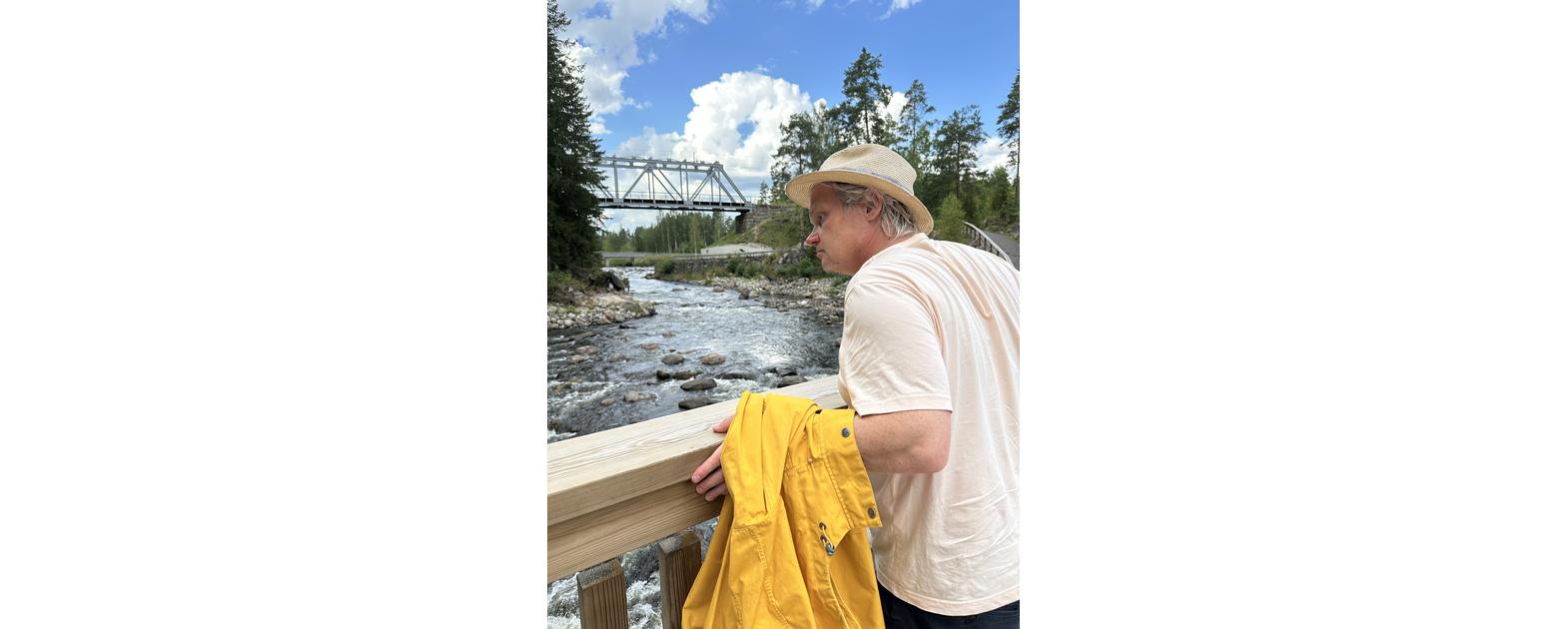
Häyhä's life continues to amaze, and so does the next destination. The Hiitolanjoki River, made famous by Jasper Pääkkönen, which was long harnessed to serve extremely small-scale electricity production by modern standards, has now been freed. A guided tour leads into the history and especially the present day of this border river. The removal of three dams and the restoration of the river have transformed it into an admired and inspiring nature paradise. The critically endangered landlocked salmon can now ascend from Lake Ladoga, Europe's largest lake, right next to main road 6. By the way, the Hiitolanjoki River also smells completely different than before. An astonishing effect on both nature and the human mind when the river is allowed to flow freely.
From the river, it's a 1.5-kilometer walk to the center of Simpele, but with our belongings, we gladly accept the bus ride included in the package to the town. It's time to check in. We spend the first night in a 'live like a local' spirit at Simmes Apartment Hotel. Excellent local atmosphere, just like at our dinner destination a couple of hundred meters away, café Lounaskulma. Lounaskulma's breads, by the way, are legendary; I always buy them whenever I have the chance. Usually, it's at some local event where the entrepreneurs are actively present. They also have a regional rarity, a genuine soft-serve ice cream machine. A temptation I always succumb to when the opportunity arises.
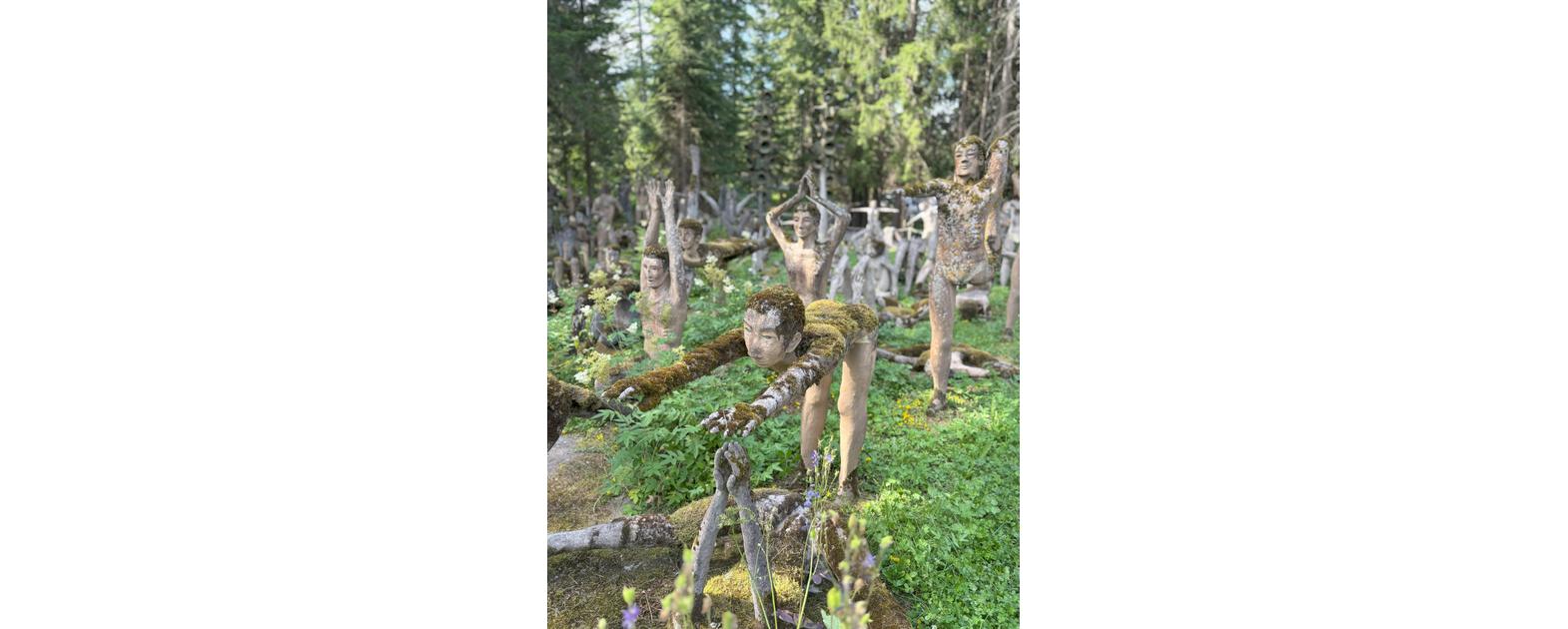
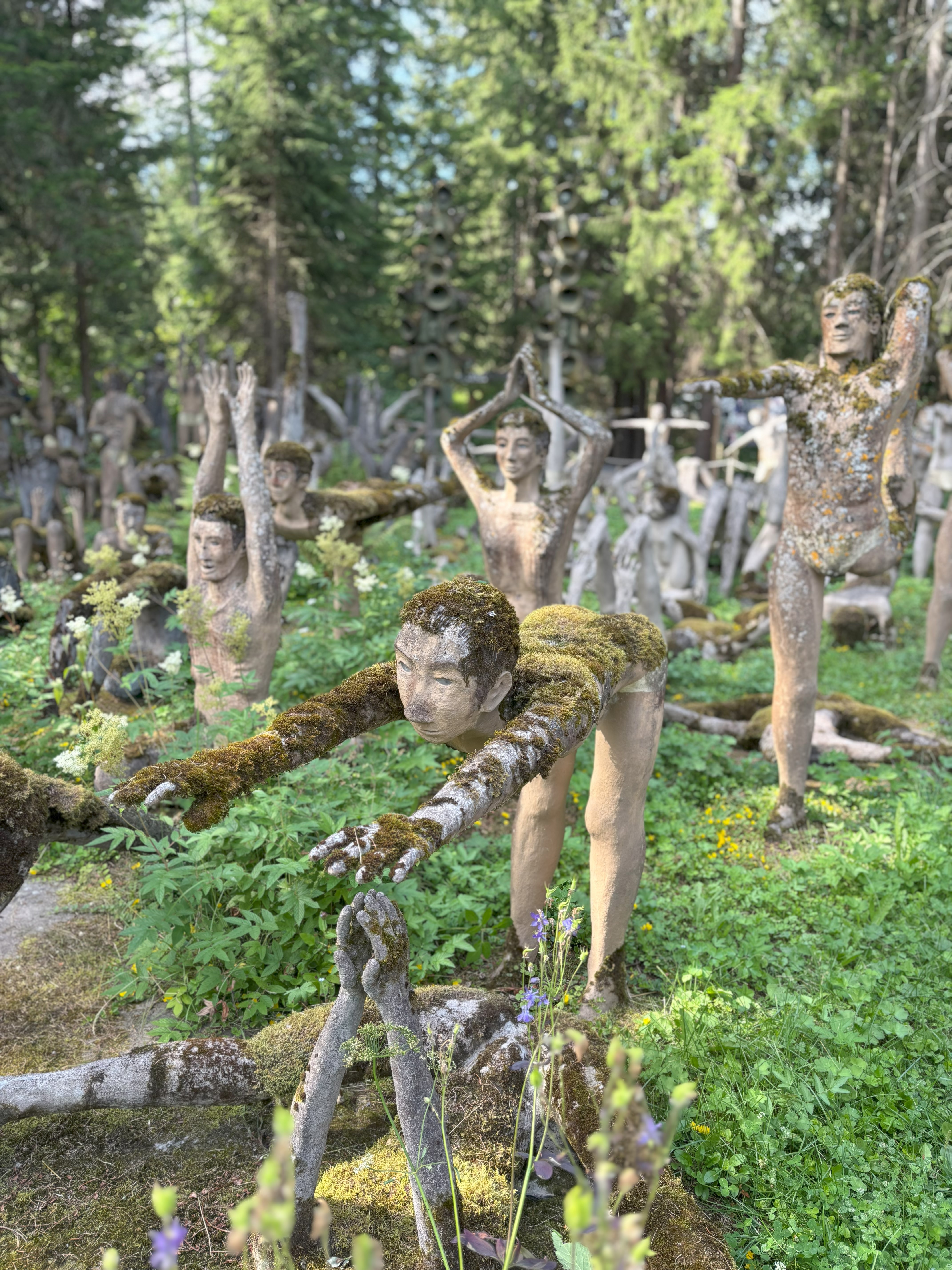
After a good night's sleep and a leisurely breakfast, it's time for an exceptionally wonderful destination. Although I know Veijo Rönkkönen's Sculpture Park very well as someone from Parikkala, I never tire of marveling at how I always find something new there. Rönkkönen, who spent his career as a paper mill worker, dedicated his life to creating a new world in his backyard. It consists of a paradisiacal garden where he cast over 500 sculptures. Rönkkönen was such a shy person that, despite his strong desire, he hardly dared to leave his home municipality. So he let his art speak and built something truly unique around himself. Walking into the Sculpture Park is like stepping into another person's imagination.
The park shop sells stylishly made products, as well as books about the park. The most interesting of these, in my opinion, is the book 'The Real Life of Veijo Rönkkönen', in which visual artist Veli Granö also reflects on the artist's relationship with 'village eccentricity'.
According to Granö, 'village eccentrics' had a particularly important social role in traditional village communities. The community found them a refreshing source of wonder and endlessly amusing conversation. These exceptional individuals were – and are – needed to unlock rigid social norms and dismantle class hierarchies.
According to Granö, Veijo's position in his community was nowhere near traditional 'village eccentricity', but his behavior, deviating from norms, clearly had positive effects on his community. This is evidenced, for example, by the exceptionally great interest his art aroused.
Rönkkönen was indeed the locals' own 'village eccentric' and a secret source of pride. If an outsider mistakenly considered the park or its host a 'freak', Rönkkönen was immediately defended.
Towards Koli
Only the first day is behind us, but my mind is filled with gratitude. How is it that such fascinating people as Veijo Rönkkönen and Simo Häyhä exist? How is it that there are such resourceful people as those who worked for decades to free the harnessed dams?
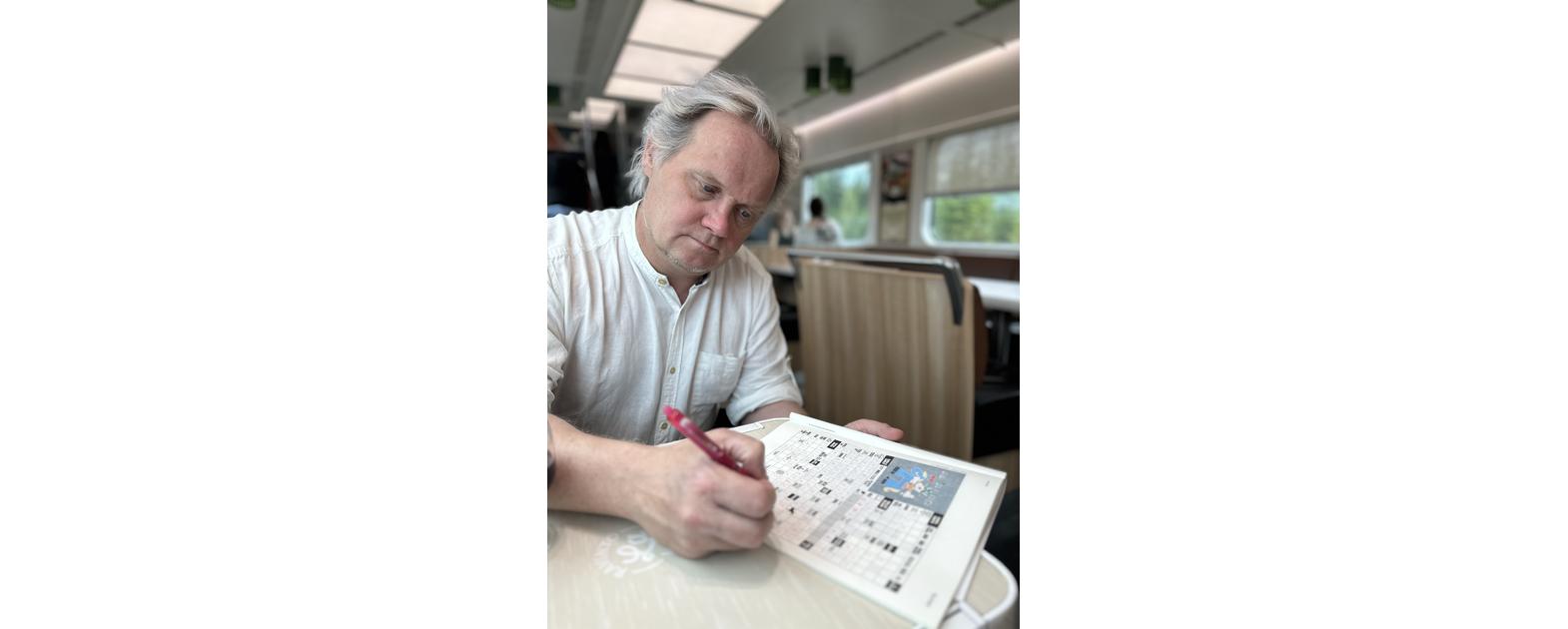
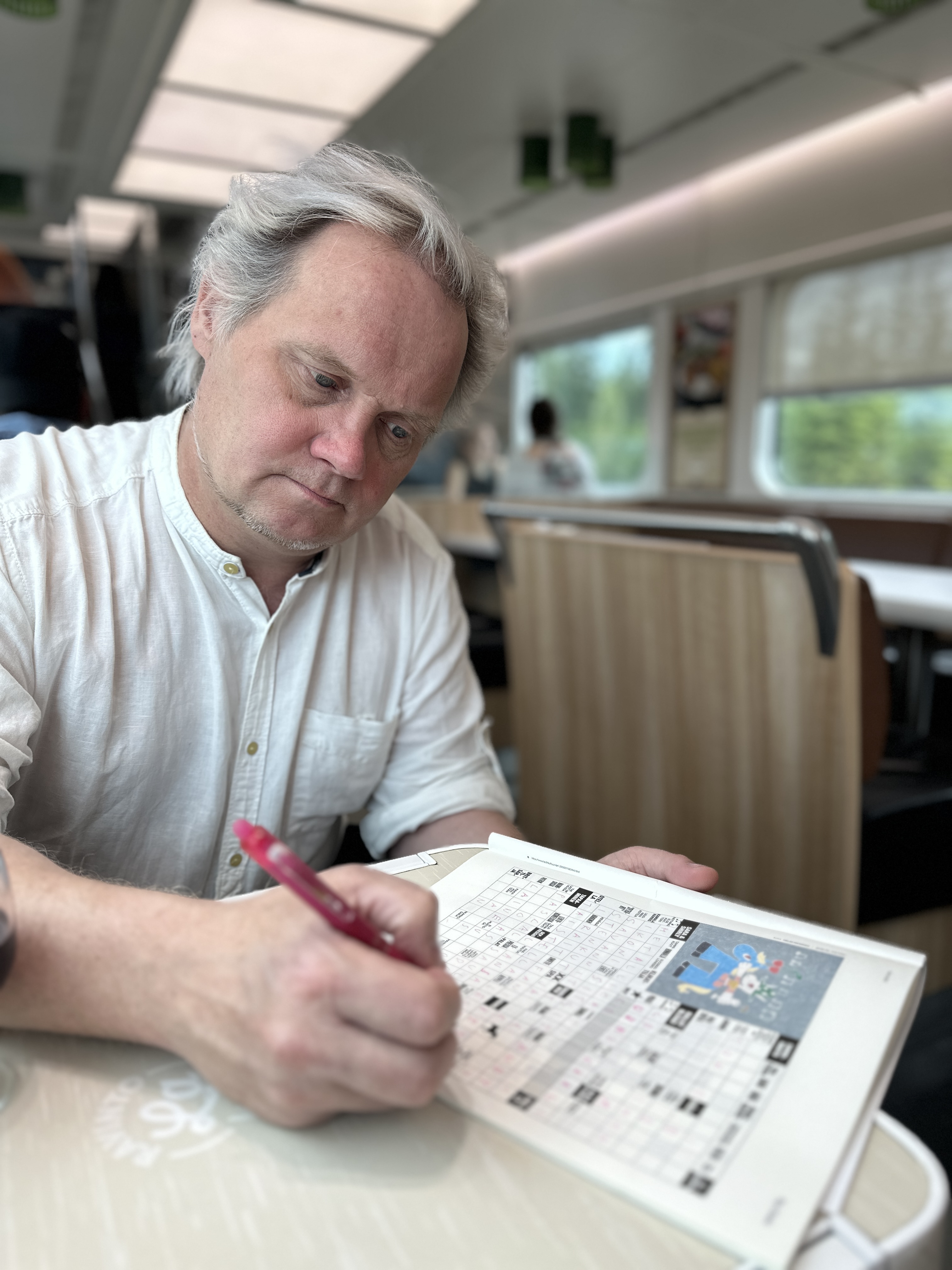
After lunch at Kägönen, the journey continues from Parikkala train station upwards along the border. The summer's hit magazine, Popristikot, barely has time to be opened on the table when the car-free journey has already reached Joensuu. Once again, a car ride is waiting on time, and off we go towards Koli.
Lieksa's Koli, as a whole, is exactly what Finnish tourism needs. It is a locally and internationally fascinating nature destination that operates year-round. Too harsh seasons are not only bad business but also environmentally unsustainable. Koli is a good example of how a large spa hotel can be integrated into the landscape. An anchor investment ensures that the flow of people is somewhat predictable, which in turn enables other entrepreneurship. While sitting on Kolin Ryynänen's terrace, we heard from locals that the village was reportedly 'practically dead' a few years ago. Until S-Group began investing in the area. There is probably no other municipality in Finland with 250 inhabitants that has two large hotels.
For us, spas are a somewhat unfamiliar concept. Neither of us remembers ever seeking one out. But, but. Spas are wonderful! At least in Koli. We don't even have a hot tub, so those hours just flew by with smiles on our faces, just chilling out. Especially since we had already explored Koli from top to bottom during the day.
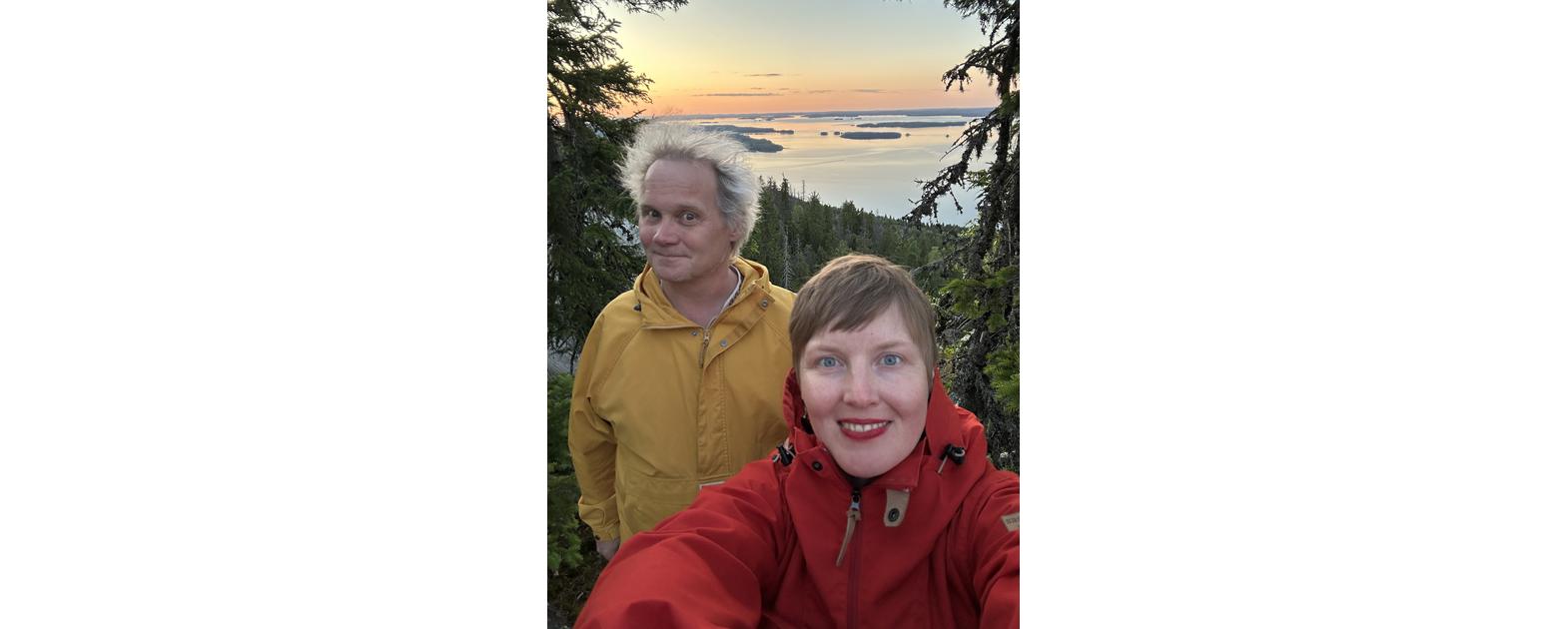
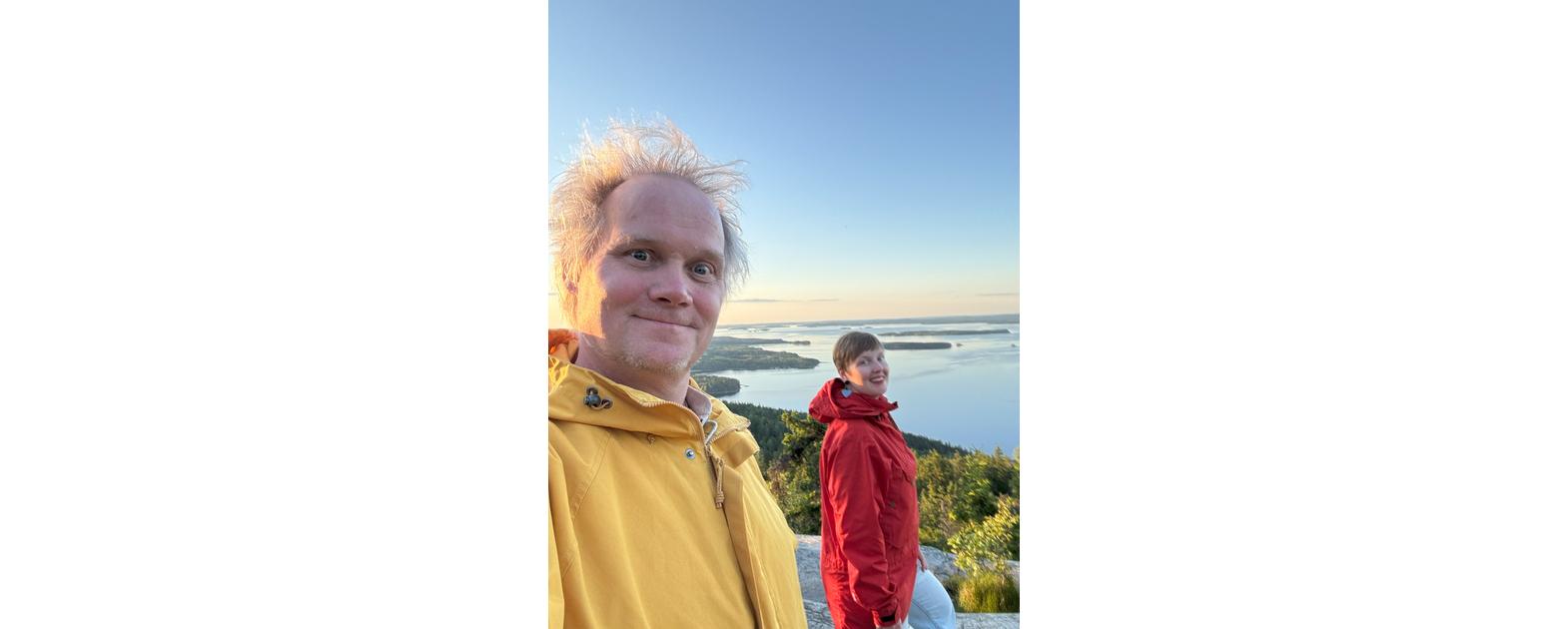
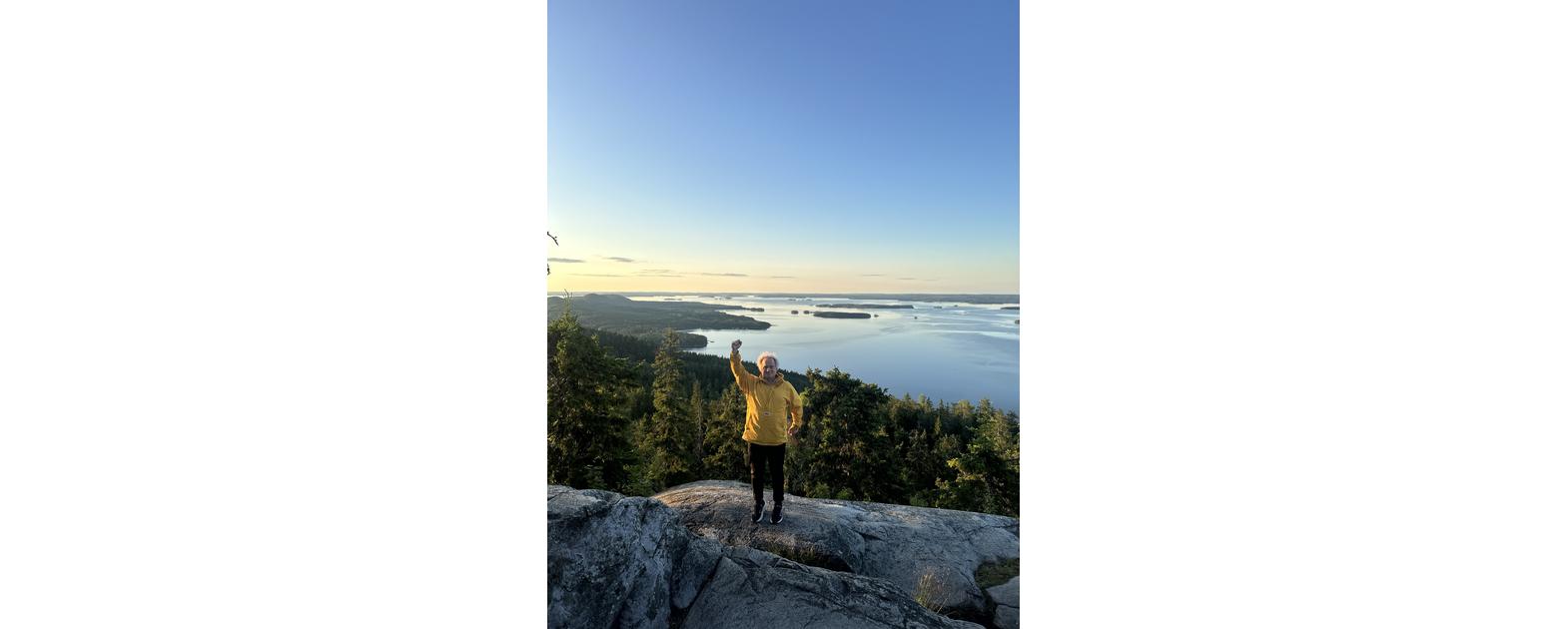
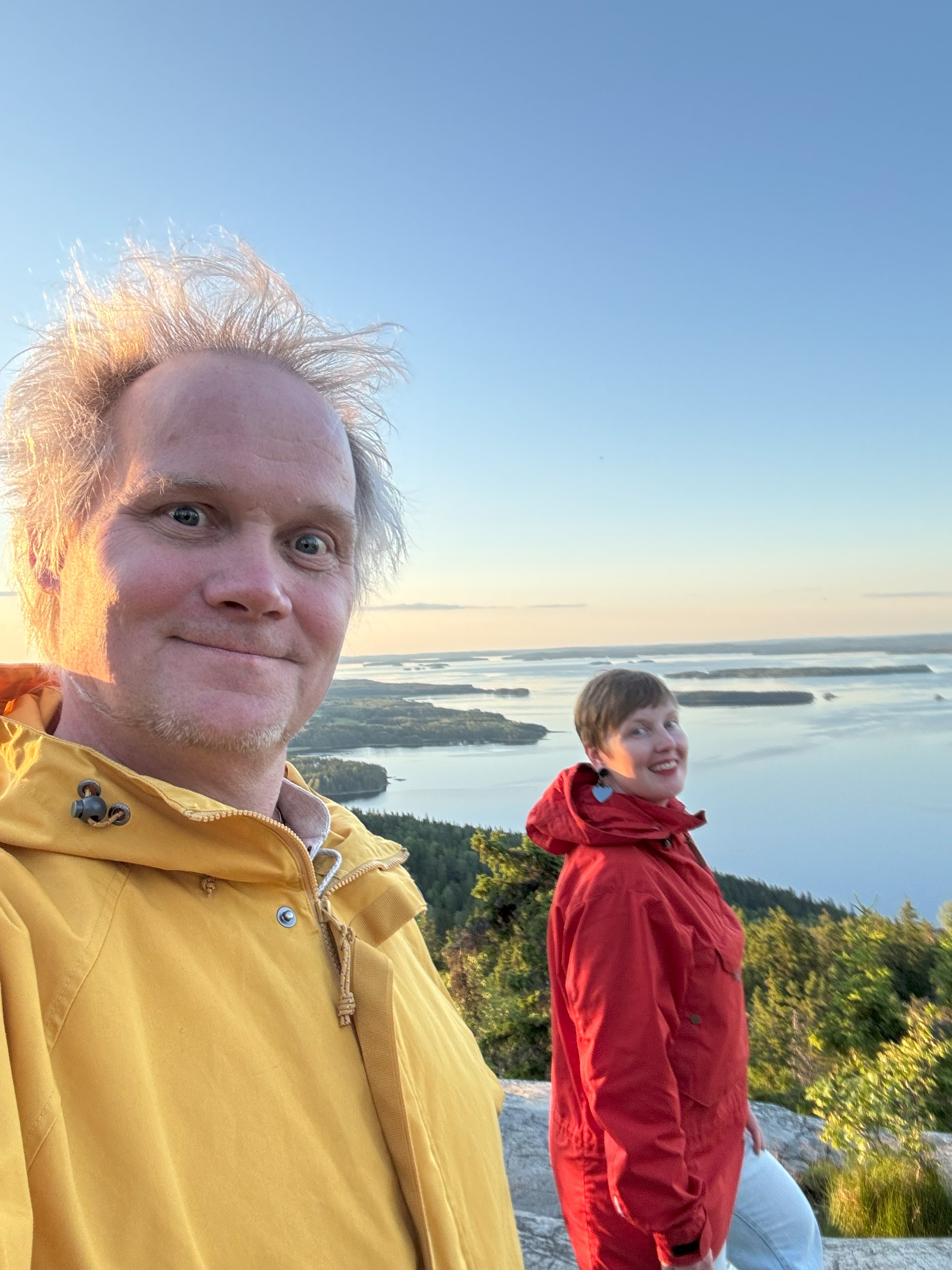
Koli's peak is accessible from the hotel without hiking skills or sweaty gear. If you stay at Break Sokos Hotel Koli, like we did, everything is within a couple of hundred meters. As a selfie destination, Koli is a bit like Olavinlinna's pontoon bridge: often seen and for such good reasons that taking pictures is simply a must.
Ukko-Koli, named after the supreme god Ukko, reaches the highest and is undoubtedly the most famous spot. But the best photo locations are at Akka-Koli. They are such a dominant duo that a rushed Koli visitor can easily miss Paha-Koli. Even though the distance to it from the hotel is only a few hundred meters. Paha-Koli made the biggest impression of all. Our excellent guide told us that the word 'paha' (bad) has several meanings. It is not only 'pahainen', meaning a bit smaller than the other two, but it would also have been used for intimidation. According to ancient tales, witches, villains, and other scoundrels were once thrown down from that very spot on Koli after a trial. If they died, they were guilty; if they survived, they were not. Easy. The guide, however, suspected that it is also possible that the legend is merely a legend and has already been sufficient in itself to keep the ancient inhabitants of Koli on the straight and narrow.
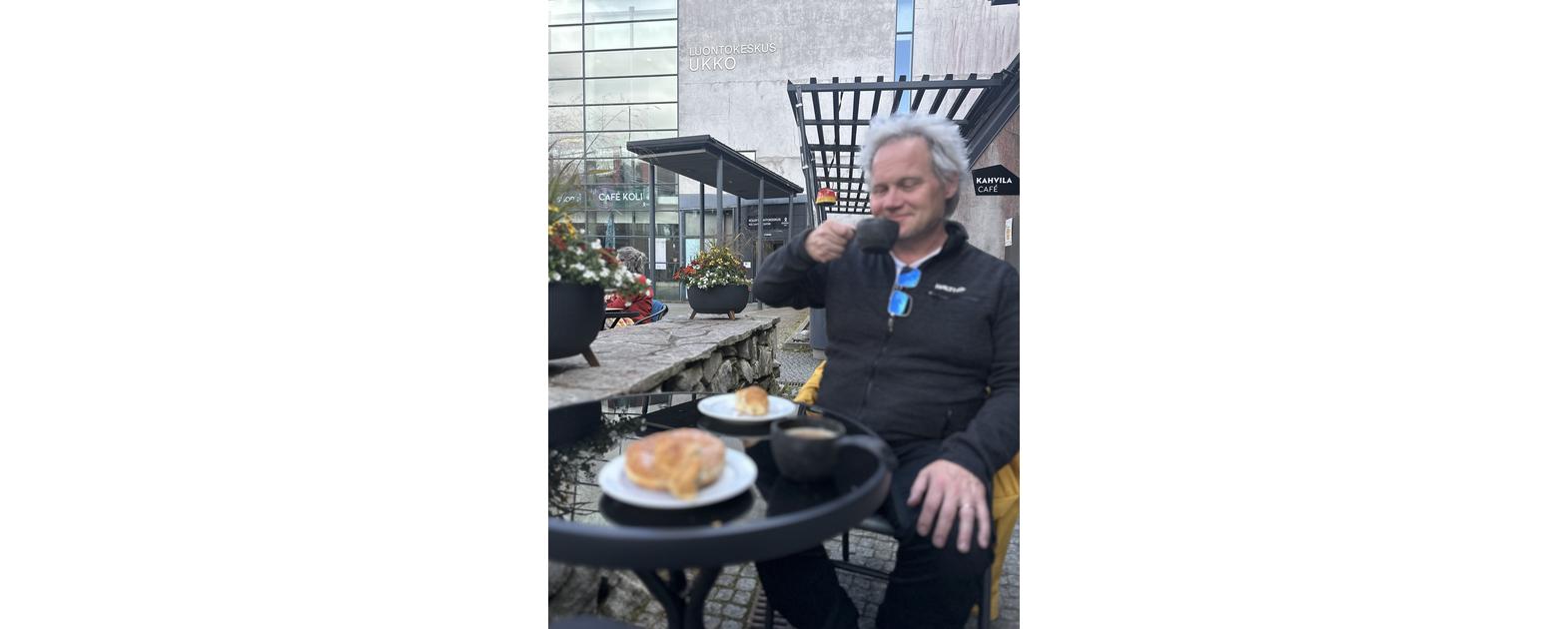
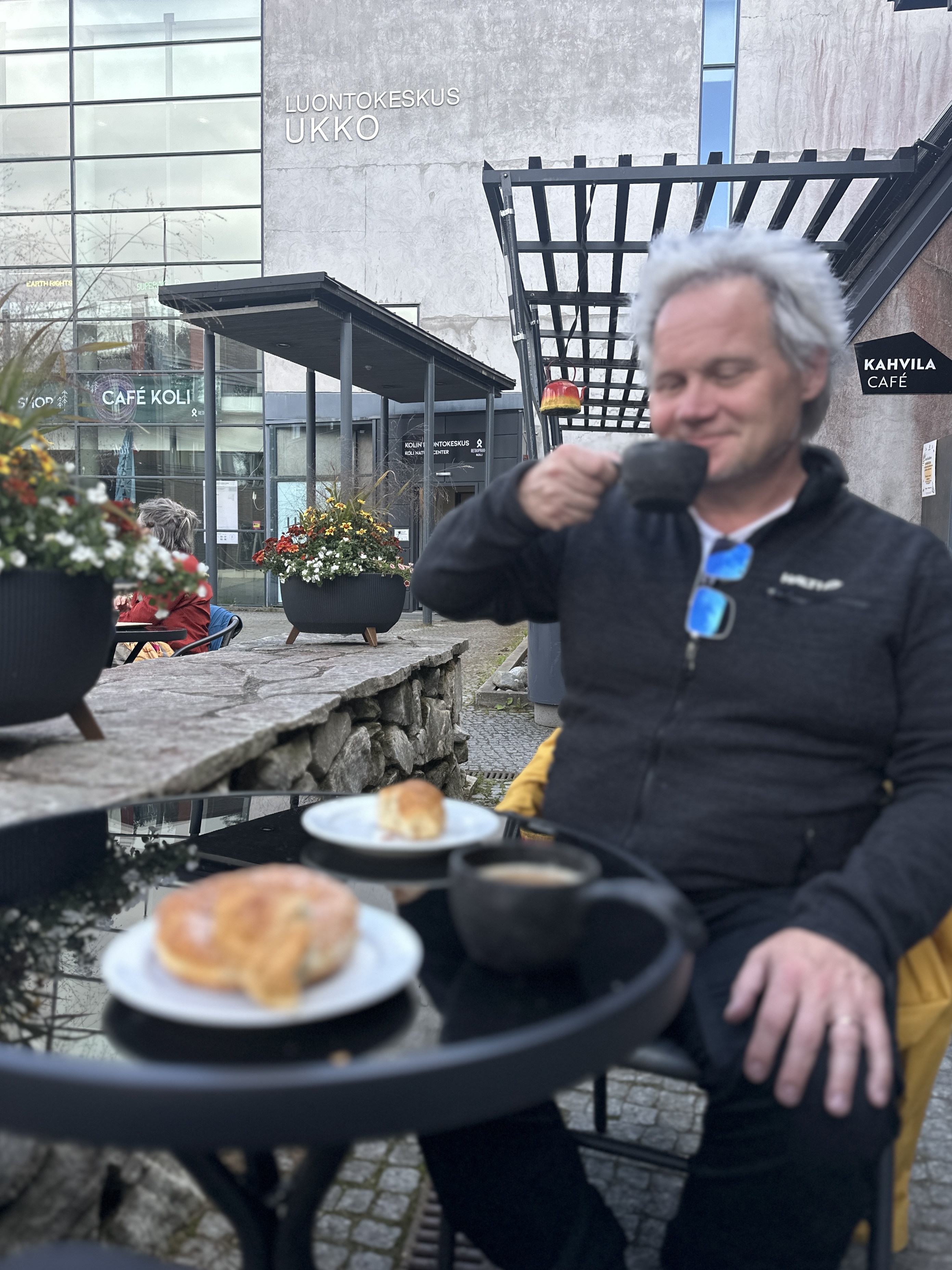
The day continues at Koli Nature Centre Ukko, where you can learn about the region's geology, national landscape, and cultural heritage. The museum tour is versatile and interactive – also for children. Special credit goes to the ambitiously implemented museum shop and the excellent café. The best donut of the summer, easily.
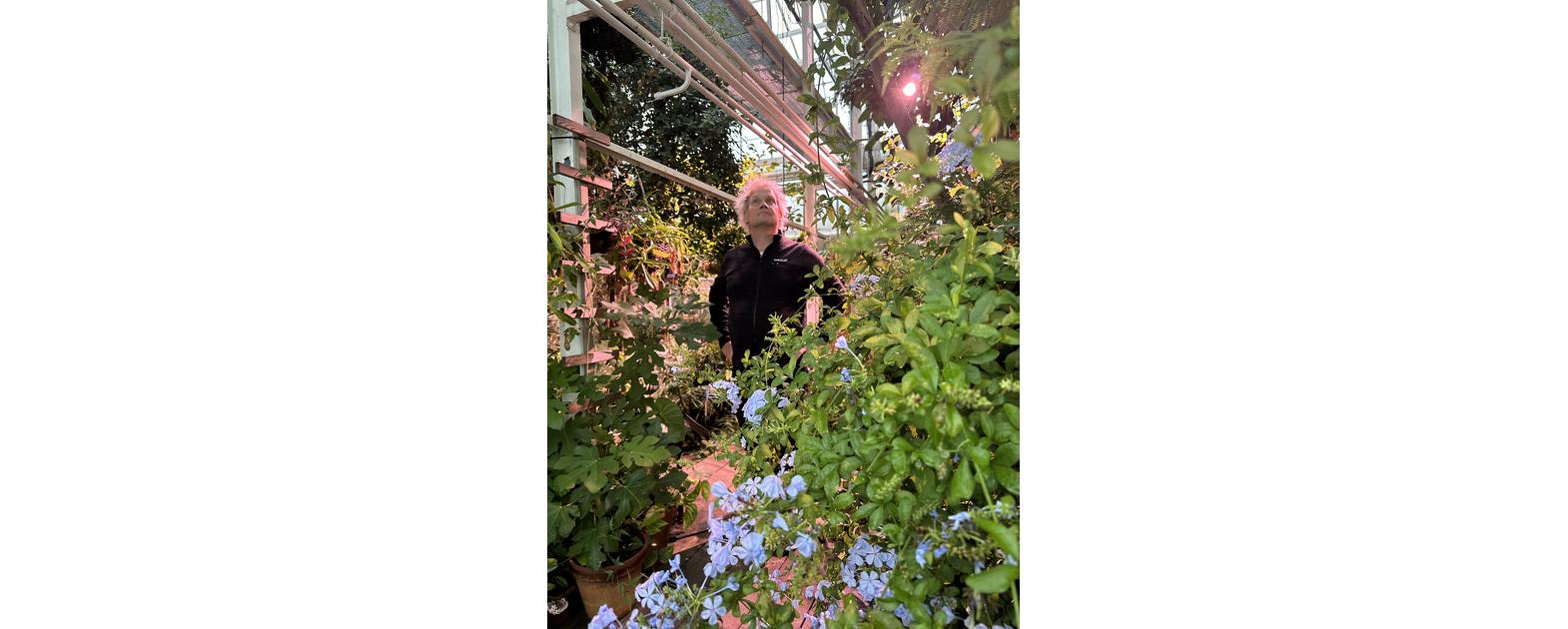
At the end of the trip, the car took us to another surprising destination in the center of Joensuu, namely Botania.
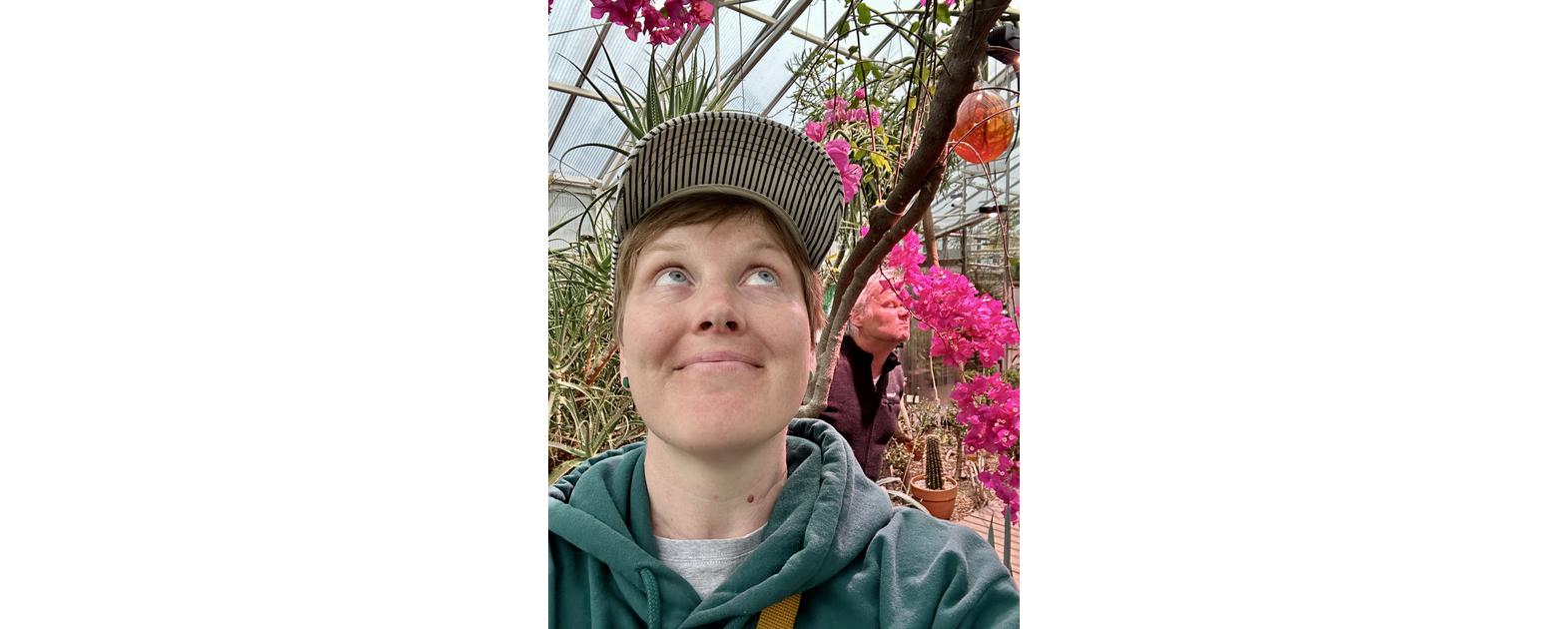
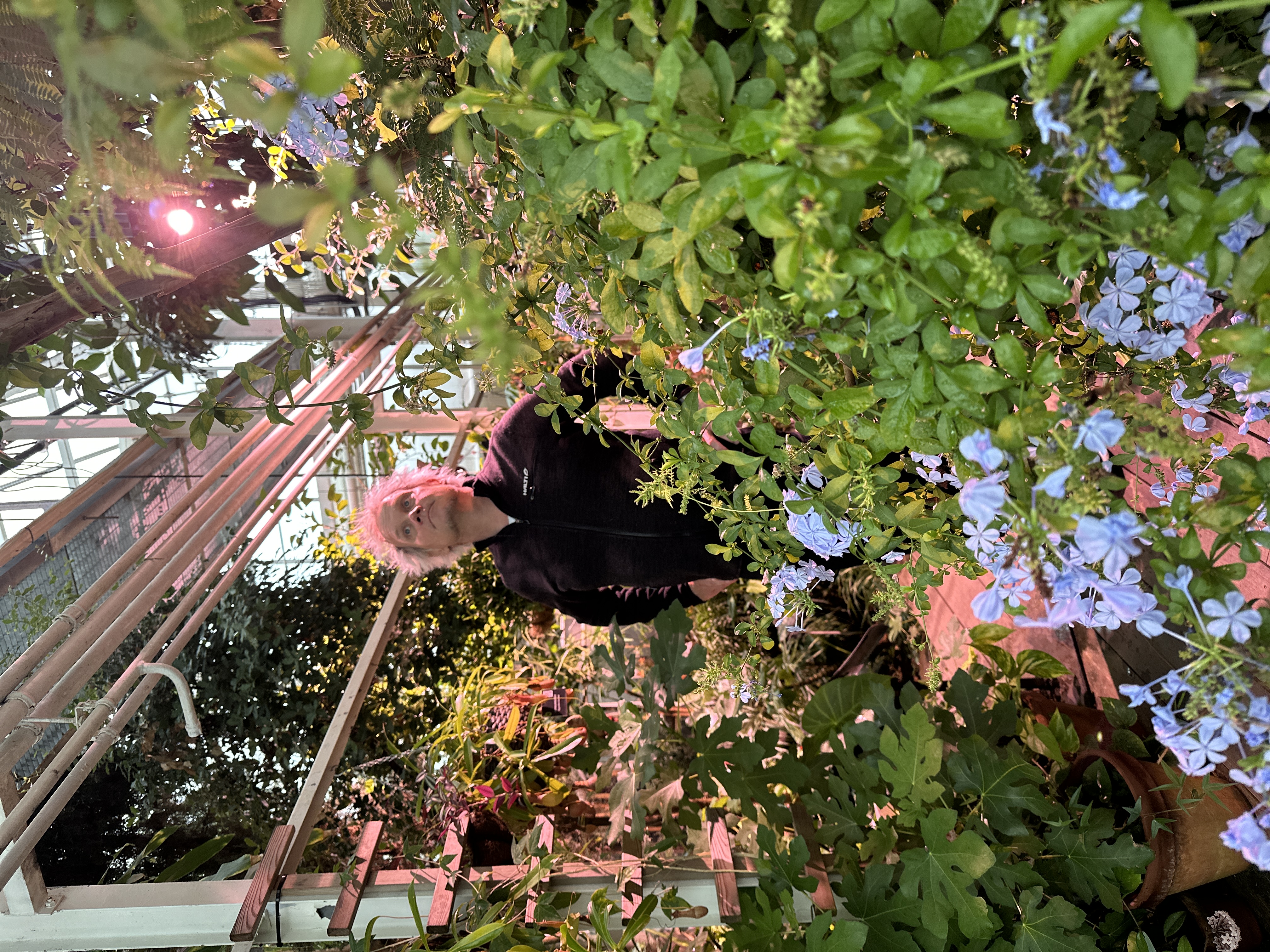
Joensuu's Botania is a secret oasis on the edge of the city – a place where the humidity of the rainforest, the lightness of butterflies, and the scents of the tropics intertwine with the Finnish landscape. Much like several times already on this trip, the world changed quickly. This time, lush jungle-like greenery and butterflies transported us elsewhere... Botania is not just a botanical garden – it is an experience where plants, colors, and warmth speak directly to the senses. After the tropics, the stone paths of the outdoor garden lead the visitor into the silence of Finnish nature, where the rustling of trees and the murmur of water complete the experience.
Special thanks for the dining experience
The trip felt a bit like summer camps used to. It seemed like we were constantly eating or it was coffee time. And it was wonderful! Coffee and lunch spots like Lohela and Lounaskulma represent exactly the kind of small-scale charm that more and more people seek on their travels.
The breakfasts in Simpele and Koli were excellent; on the way, we had lunch at Kägönen at Parikkala train station, as per the itinerary. The hotel-restaurant, nicknamed “Little Bomba,” is an exceptionally atmospheric destination.
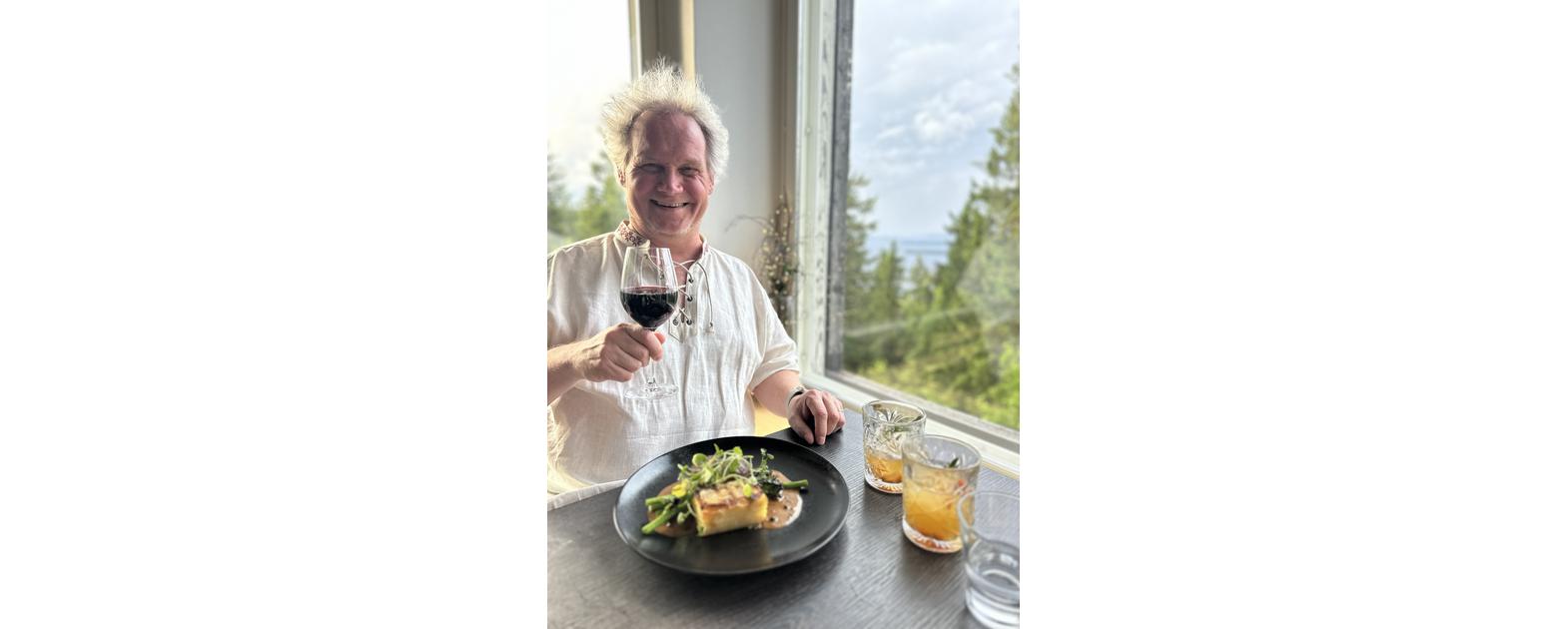
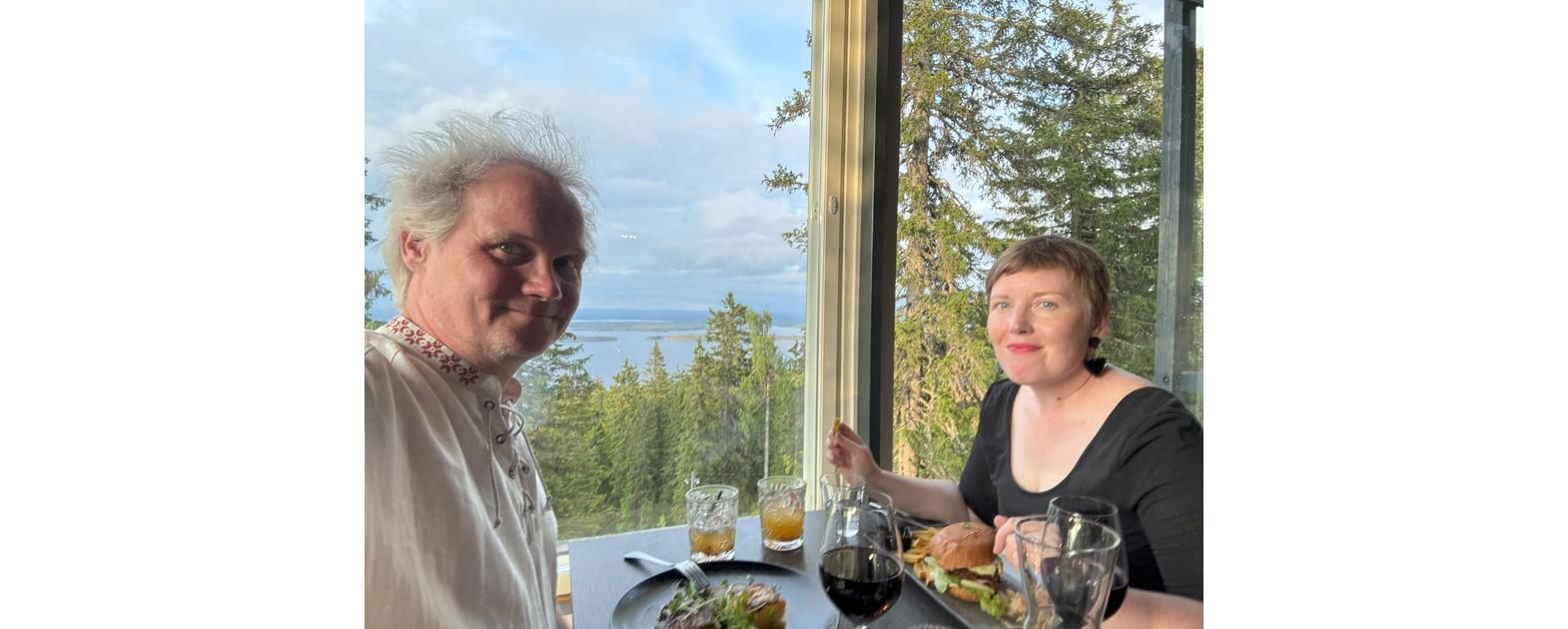
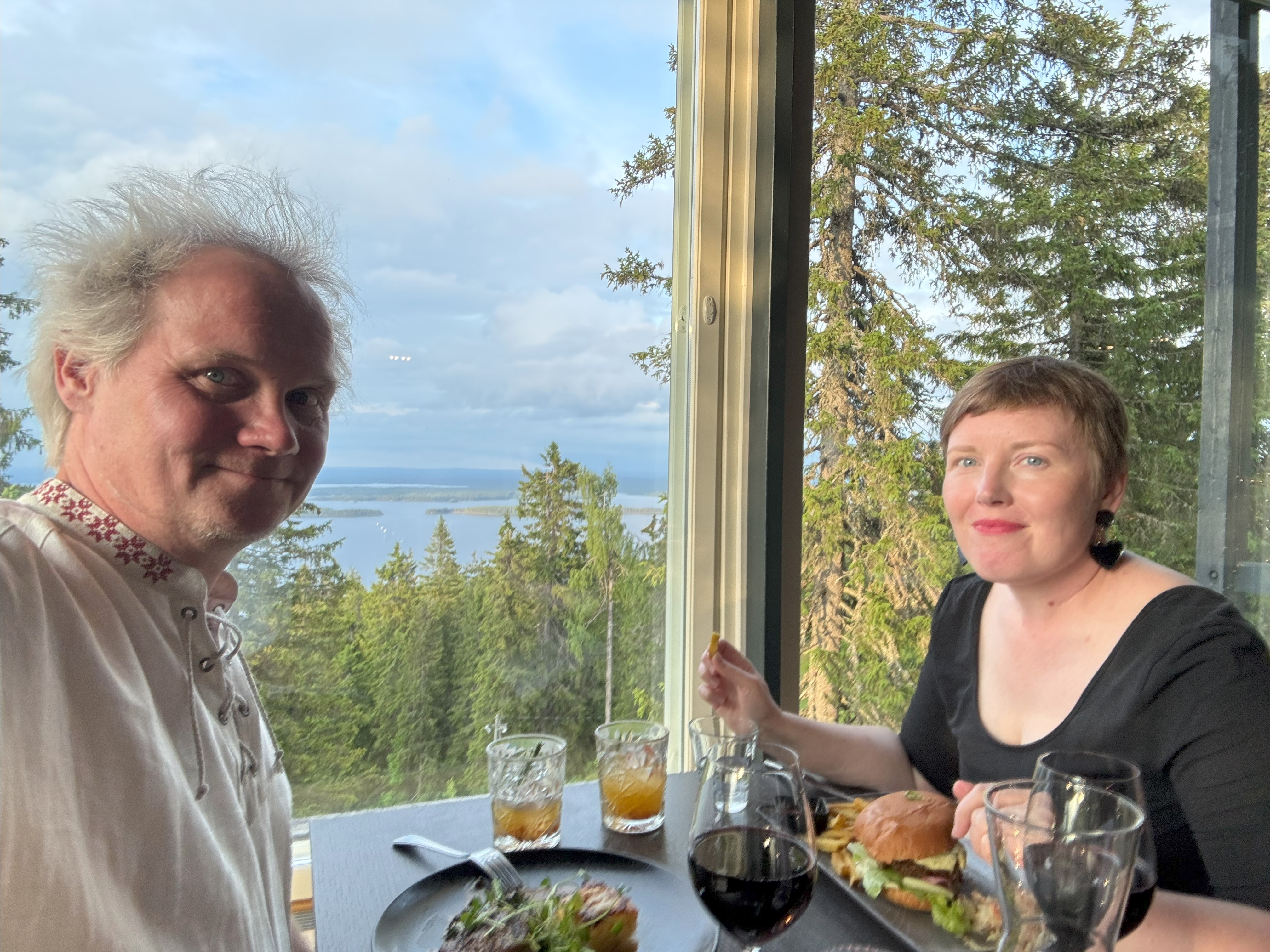
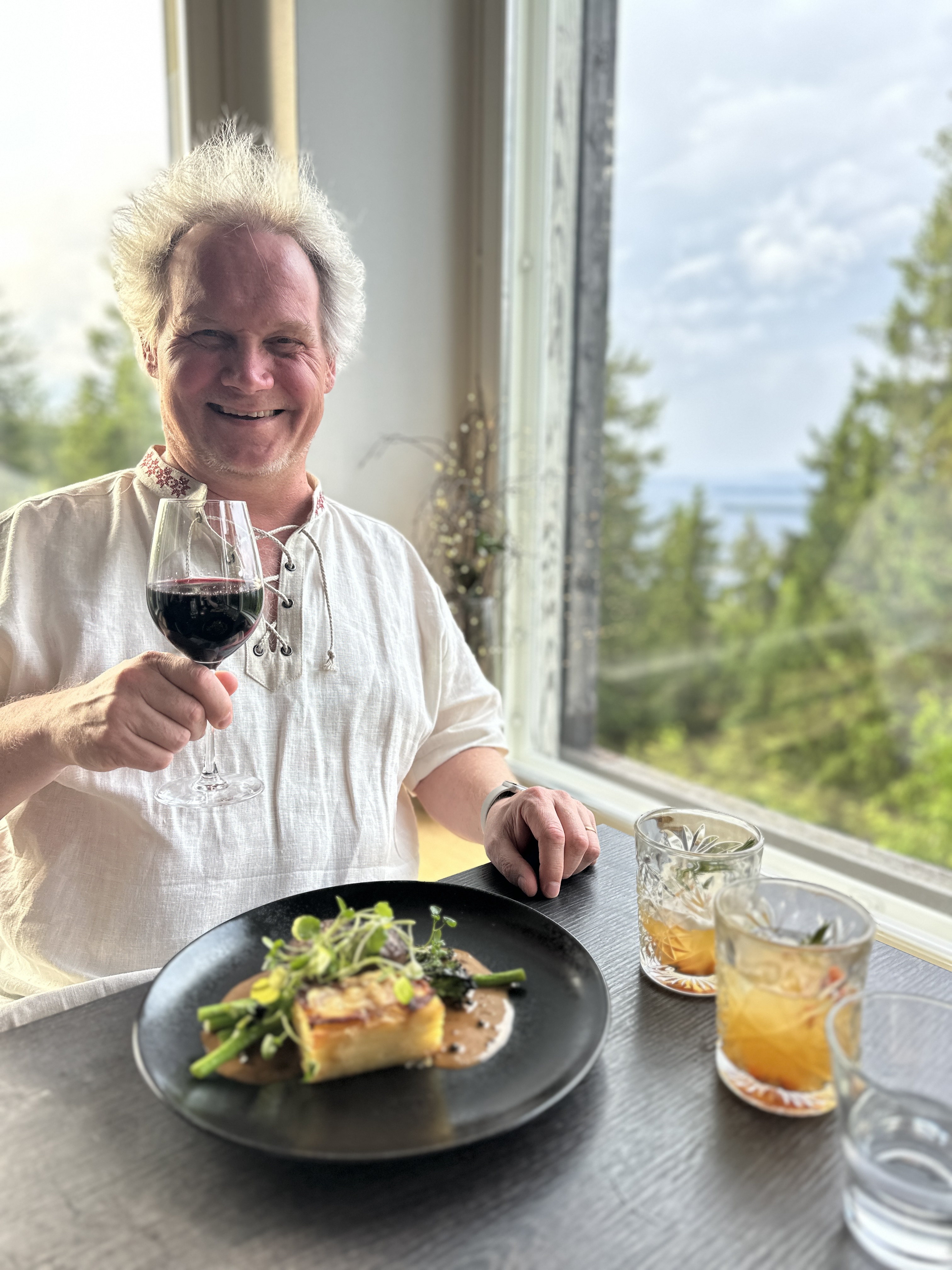
We really ate well in Koli. I must admit, I've had some reservations about S-Group's restaurants, thinking that the food is always the same bland fare, whether you're at ABC, Rosso, or Amarillo. My information or memories were way off. The kitchen at Koli's Sokos Hotel was actually excellent. The generous use of local fish was particularly wonderful. It was truly memorable to gaze at the national landscape towards Pielinen and eat pike-perch caught from that very lake the previous night. The staff knew their job and also focused on wine pairing with pleasant precision. One of the culinary highlights of the summer!
Summary
- Suitable for car-free travelers: all transportation arranged from start to finish
- Rich program: history, nature, art, science, and incredibly good food
- Easy and ecological: train + short transfers = small carbon footprint
- Accessible: does not require top physical condition or wilderness skills. But if you want to hike more, that's also possible. Especially at the Koli end, you can really work up a sweat if you wish.
The new tourism product offers not just places, but the story of Eastern Finland, which transports you through borders, history, and nature. And all this – without a driving license.
Keywords