-
Essential:
Essential cookies are essential for you to browse the website and use its features. Cookies that allow web shops to hold your items in your cart while you are shopping online and navigating the website are an example of strictly necessary cookies. Our website does not work without these cookies, so they are stored without your express consent.
-
Preferences cookies:
Preferences cookies can be used to change the user experience of our website. Preferences cookies allow a website to remember choices you have made in the past.
-
Statistics cookies:
Statistics cookies are used to collect information about how you use our website. None of this information can be used to identify you.
-
Marketing cookies:
Marketing cookies track your online activity. The purpose of marketing cookies is to help advertisers deliver more relevant advertising or to limit how many times you see an ad.
A CHRISTMAS STORY FROM THE BORDERLANDS
Once upon a time, in the era of aspen canoes and crackling fires, a fragment of a tribe, after gathering from here and there and ascending enough raging rapids, decided to settle by moderate lakes. It was good to live here: fish and forest produce were abundant. Then slash-and-burn smoke rose, turnips and rye flourished. The people prospered.
When one generation after another had passed, one person dived from the bottom of the water for a peculiar ore. Another smelted it with fire, and soon it was being hammered on the shorelands. A suitable material had been obtained for spearheads, arrowheads – and for the hard hooves of a unique animal obtained through bartering pelts.
Soon, rumors of the cross began to spread. Soon it was seen around the necks of robed men, whose speech was strange. Another loose-stone hillfort had also already been seen, in the middle of a great river, along an old route. From here came, time and again, new iron-clad swordsmen, smiths, and also carriers of other taxes.
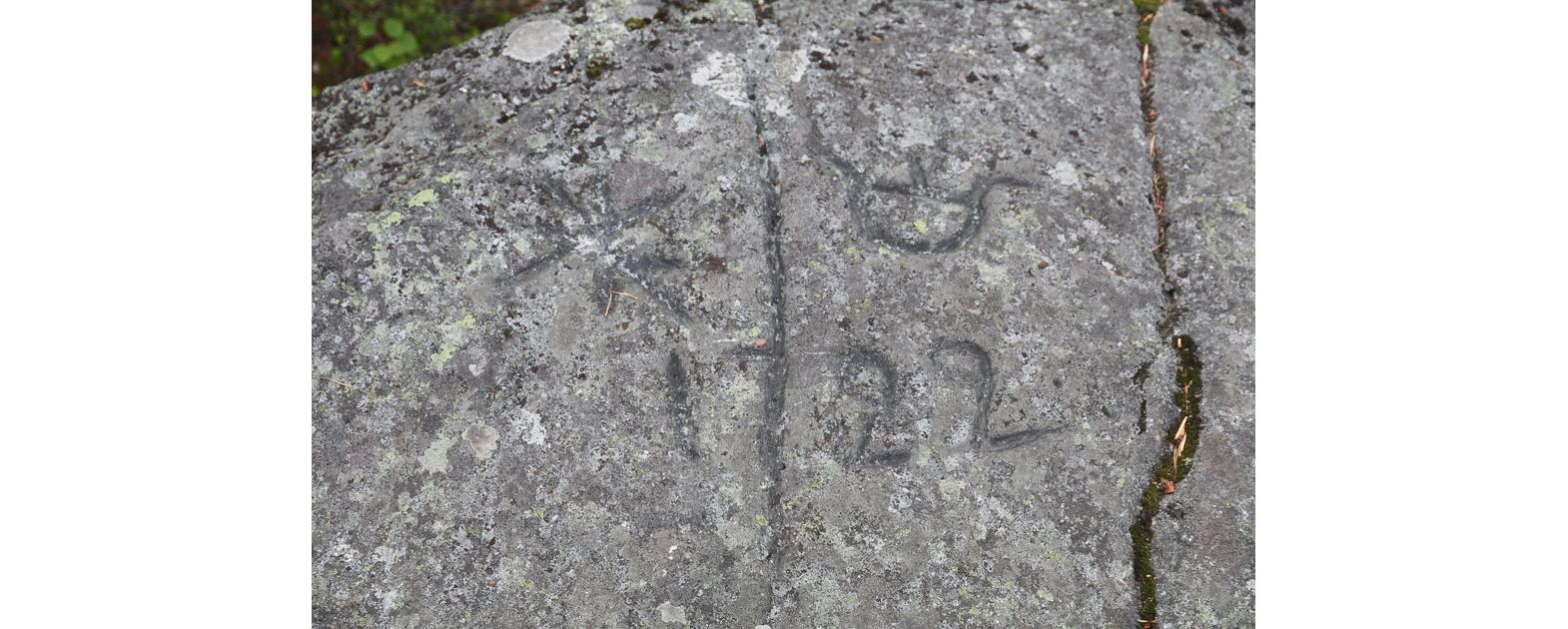
Soon, neighbors called each other Swedes or Russians, even though they spoke the same way. And incitement wasn't enough; one had to be wary if a familiar grey log village was already ablaze, or worse. Safety from wrath was a hidden wilderness cabin, although pictures were said to have been carved into rocks and stones somewhere.
Finally, those who crossed themselves by hand towards the rising sun grew weary of trials, and migration to other lands began. Those who remained intermarried. Also, the inhabitants of the wilderness, those fewest of the few Sami, moved away. Someone joked: the old men don't understand the ways of the Savo men...
Now, the tar pile made by the newcomers sweated black liquid. Greedy merchants and Germans bought it even further away, not only on the shores of Aallokas in old Käk'salmi, but also further west on the waters of Saimaa, on the shore of Lappeenranta. The seine net still yielded silver-sided and red-fleshed fish, even from far away.
But even the filling of barrels did not last long; again, the war drum sounded, and a long march began. When the tumult finally subsided, instead of on stones, the marks of powers were written on rolls wrapped in parchment.
Nevertheless, the people of Karelia sometimes also had good fortune, who soon abandoned their old plow and field and, having received word from the most experienced, set off for Piiteri, which was said to be a wonder of the Ingrians (St. Petersburg).
There, even the streets were perhaps gilded, and they bought everything, even small stones. Well, at least large ones. And timber, planks, summer butter, ruff... A peculiar invention was also such a tile stove, whose fuel was chipwood. Someone had to poke and prod them, and even nurse and serve the children of the better folk. So much for that!
In the parish of Parikka, there was now enough grazing land for cows, and the roads were full of flocks of sheep. On the Simpele side, a strange red-brick establishment began to rise again at the roaring threshold of the rapids...
Until red flags rose here and there, and people resorted to guns. When the struggle ceased, there was a barrier on the road to Piiteri (St. Petersburg), and the common people returned to their stalls. Still, mowing equipment and raking machines were seen; clover rose from the hayfields. The digging of canals, which had been left unfinished, continued. Somewhere, an electric light twinkled.
But again, a threatening cloud rose from the east, and from behind it, a metal sky was revealed to the churchgoers of Iron Lake: clad in sheets, they plunged into snowdrifts. Snow suits were also worn by those who engaged in resistance further away. Now the war drum sounded ever more hollowly; the enemy's scythe harvested the crop of life. This unholy procession continued even as a summer war until finally it was time to beat swords into plowshares. Again, drawing tools were fetched; lines were now drawn with a ruler. A part was taken, a third was seized, and the parish was even split in half. Lakes and river waters were cut off, along which the ancients once traveled here. Nevertheless, they were not enslaved: life continued, albeit with somber thoughts.
There was yet another uprising of Kärki-Karjala. As calculators of new fortunes, as a state of guardians, as processions of schoolchildren, as a mighty dairy, as baseball players, as awakeners of the spirit of the land... as well as in the work of smiths, where sheet metal bent, iron broke, and a rubber wheel was made from a hoof. With these, modern times dawned.
But soon one departed, then another. The mobile shop still operated, until it ceased to move. The shop closed, the post office left. The old generation stayed, the young generation moved away. This was the final phase.
One asked, then another: where shall we go now, where shall we turn? A consultant was already called, even a disciplinarian for the municipality. He gave an anonymous piece of advice, raising his fee by half: here we need vitality, not weakness unto death; here is already a strong medicine, but there's still a small 'but'...
Venture or mistake, tourism or abandonment? From where will a tourist come here, when even a nudist can't stand the cold? Do we have any business if you only serve convenience foods? Who will serve here if everyone is just twiddling their thumbs?
He attended meetings, coffees and pastries were consumed, and car taillights – the best Christmas lights – were seen. Soon the gentlemen startled, had the bells chimed, will we get attention now, or the final judgment. The North Star shone in the night, it did not scold, even though it departed. Here, we are not short of anything – with joy and curses in the borderlands.
-Borderlands Master